
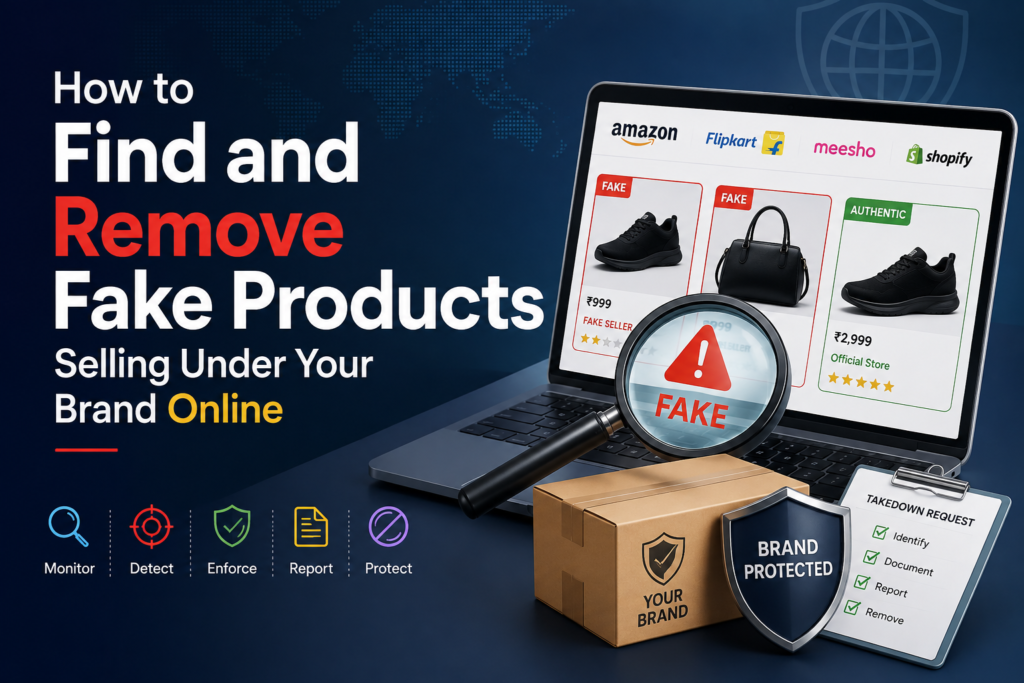
Every growing brand eventually attracts the wrong kind of attention. The moment your product starts selling well, someone somewhere is already copying your logo, cloning your packaging, or listing a cheap fake under your name. Brand protection is the discipline of stopping exactly that — and for Indian brands scaling across marketplaces, social media, and their own websites, it has quietly become one of the most important investments they can make.
This guide breaks down what brand protection really involves, how enforcement actually works on the ground, and how to choose the right partner. No jargon, no fluff — just what a founder, IP manager, or e-commerce lead needs to know.
What Is Brand Protection, Really?
Brand protection is the ongoing process of detecting, verifying, and removing anything that misuses your brand — counterfeit products, fake listings, copycat websites, impersonation accounts, and stolen content.
It is not a one-time legal filing. Registering a trademark gives you rights; brand protection is what turns those rights into real-world action. Think of it as the difference between owning a house and actually locking the doors, watching the CCTV, and calling security when someone breaks in.
A serious program usually covers four fronts: e-commerce marketplaces (Amazon, Flipkart, Meesho), social media, domains and websites, and your original content and creatives.
Why Brand Protection Matters More Than Ever
Counterfeiting isn’t just a luxury-goods problem anymore. Fake chargers, spurious medicines, duplicate cosmetics, and knock-off apparel flood Indian marketplaces every single day. The damage goes well beyond lost sales.
When a customer unknowingly buys a fake and it fails, they don’t blame the counterfeiter — they blame you. Your reviews drop. Your reputation erodes. And in categories like pharma or electronics, a fake can even be dangerous. That’s why treating brand protection as a growth function, not just a legal formality, separates resilient brands from vulnerable ones.
There’s also a silent revenue leak: every fake sold is a genuine sale you never made. For a mid-sized D2C brand, that can quietly add up to lakhs each month.
Brand Protection Services: What Good Enforcement Looks Like
Strong brand protection services follow a clear, repeatable cycle rather than random takedowns. At The IPDefender, this is the backbone of how effective protection is delivered:
Detection
The first step is finding the abuse. This means continuously scanning marketplaces, search results, social platforms, and newly registered domains for anything using your brand assets. Good brand monitoring catches problems while they’re small — before a single seller becomes fifty.
Verification
Not every match is a violation. A reseller may be legitimate; a similar name may be coincidental. Skilled teams verify each case against your actual IP rights, so enforcement effort goes only where it truly belongs.
Takedown
This is where rights turn into results. Verified infringements are reported through the correct channels — marketplace IP programs, DMCA notices, registrar complaints, or platform reporting systems. The goal isn’t just removal, but fast removal with proper documentation.
Monitoring
Counterfeiters are persistent. A seller taken down on Monday often reappears under a new name by Friday. Ongoing anti-counterfeiting monitoring closes that loop, tracking repeat offenders and keeping pressure on.
Brand Protection Solutions Across Industries
The right approach shifts by sector. Effective brand protection solutions are never one-size-fits-all:
- Fashion & apparel: Heavy on marketplace fakes and Instagram/Facebook impersonation stores.
- Pharma & healthcare: High-stakes; spurious products carry safety and compliance risk.
- Electronics & accessories: Flooded with duplicate chargers, cables, and grey-market imports.
- D2C & FMCG: Fake listings and hijacked product pages that steal Buy Box traffic.
- Luxury: Sophisticated counterfeits requiring both online takedowns and offline coordination.
Brands can explore sector-specific approaches on the industries page, since a pharma strategy looks nothing like a fashion one.
How to Choose a Brand Protection Company
If you’re evaluating a brand protection company, a few factors matter far more than a slick sales pitch:
Coverage. Does it protect all your channels — marketplaces, social, domains, and content — or just one? Fragmented protection leaves obvious gaps.
Speed and success rate. Ask how quickly takedowns happen and what percentage succeed. Slow, low-success enforcement is barely better than none.
Transparency. You should see what was found, what was actioned, and what results came back. Vague monthly summaries are a red flag.
Local expertise. Indian marketplaces, registrars, and legal processes have their own quirks. A partner who understands them — like The IPDefender LLP — moves faster than a generic global tool.
You can review real outcomes on the case studies page before committing to any provider.
Common Mistakes Brands Make
Even careful brands slip up. The most frequent errors:
- Waiting too long. Most brands start only after a counterfeit crisis. Early monitoring is far cheaper than damage control.
- Registering IP but never enforcing it. A trademark sitting in a drawer stops no one.
- Chasing one fake at a time. Manual, reactive takedowns don’t scale against organized sellers.
- Ignoring domains and social. Fake websites and impersonation accounts often do more reputational harm than marketplace fakes.
What Does Brand Protection Cost?
Pricing usually depends on scope — how many channels, marketplaces, and regions you need covered, and your volume of infringements. Most providers offer tiered plans rather than flat fees, so a small D2C brand and a large enterprise pay very differently.
The smarter way to think about cost isn’t the monthly fee — it’s the revenue recovered and reputation preserved. Transparent, scope-based pricing lets you match protection to your actual risk instead of overpaying.
Turning Protection Into Growth
The best brand protection doesn’t just defend — it strengthens. Cleaner marketplaces mean better reviews. Fewer fakes mean more genuine sales. A trusted brand commands better pricing. Protection and digital growth are two sides of the same coin.
To see how a full program comes together — from first scan to sustained enforcement — the how it works page walks through the entire process.
5. FAQ Section
1. What is brand protection?
Brand protection is the ongoing process of detecting and removing misuse of your brand — counterfeits, fake listings, copycat sites, and impersonation — across online and offline channels.
2. Is brand protection the same as trademark registration?
No. Trademark registration gives you legal rights. Brand protection is the active enforcement of those rights against real-world infringers.
3. Why does my brand need protection services?
Because fakes cause lost sales, damaged reputation, and safety risks. The more your brand grows, the more attractive it becomes to counterfeiters.
4. How does the takedown process work?
It follows four steps: detect the abuse, verify it against your IP rights, take it down through the right channels, and monitor for repeat offenders.
5. Which industries need brand protection most?
Fashion, pharma, electronics, luxury, D2C, and FMCG are among the most targeted, though any recognizable brand can be copied.
6. How do I choose the right brand protection company?
Look at channel coverage, takedown speed and success rate, transparency of reporting, and local Indian expertise.
7. Can counterfeiters come back after removal?
Yes. That’s why continuous monitoring matters — offenders often relist under new names, and ongoing enforcement keeps them in check.
8. Does brand protection cover social media and fake websites?
It should. Strong programs cover marketplaces, social platforms, domains, and stolen content — not just one channel.
9. How much does brand protection cost in India?
It varies by scope and volume. Most providers offer tiered plans, so pricing scales with your channels and risk level.
10. How quickly can I see results?
Detection can begin immediately, and legitimate takedowns often resolve within days, depending on the platform and case documentation.